Professional kitchen cleaning in Blackpool for restaurants, hotels and food businesses
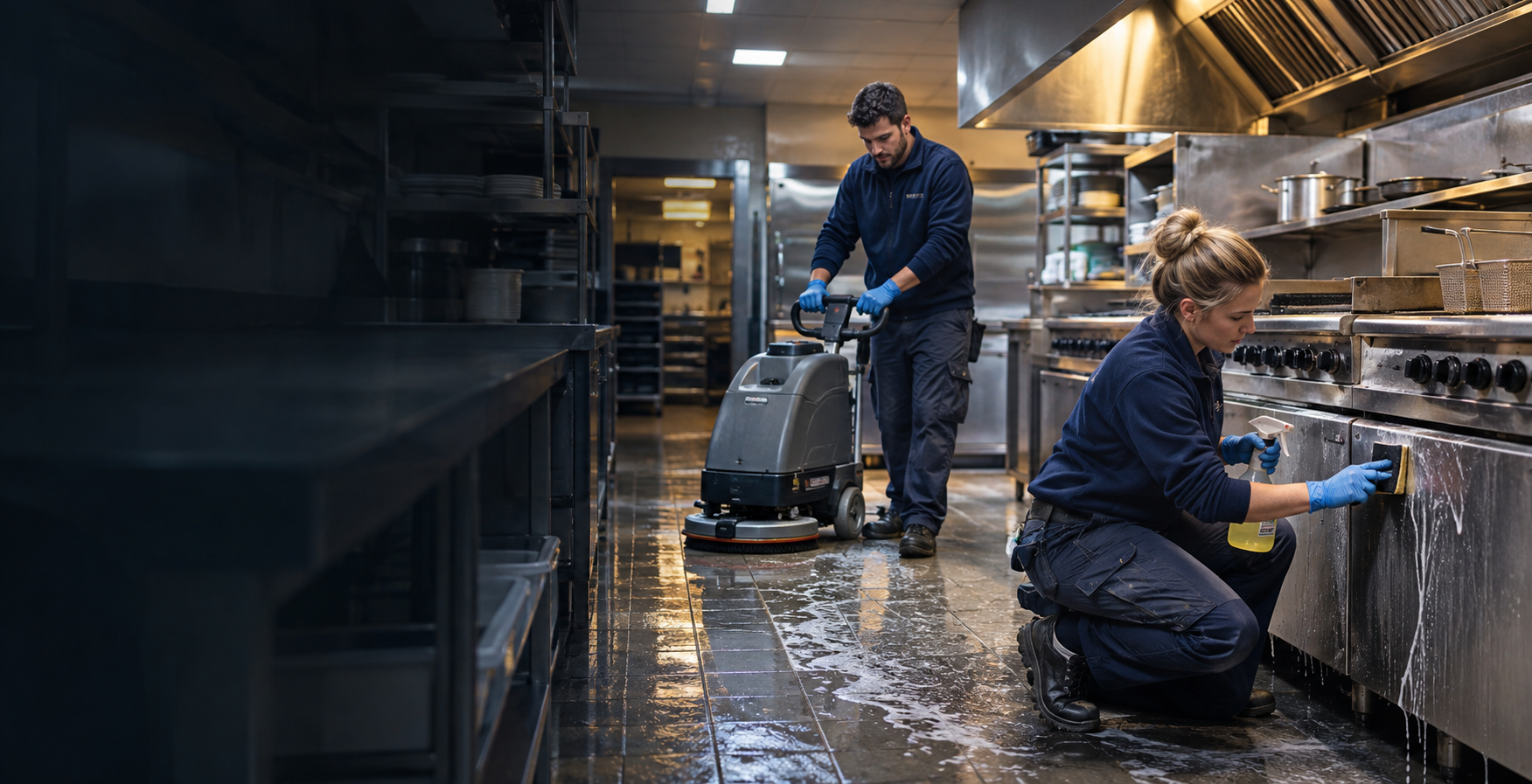
Professional kitchen cleaning in Blackpool has to fit the way a food business actually operates. Grease, airborne residue, food debris and moisture collect in different places, while surfaces and equipment have their own care requirements. Nova Clean plans detailed cleaning for restaurants, hotels, cafés, takeaways and institutional kitchens across Blackpool and the Fylde. We begin with the operator's description of the premises, the equipment that can be released, the working hours and the purpose of the clean. A kitchen preparing for reopening after a refurbishment needs a different programme from one that requires a periodic deep clean between busy service periods. Clear boundaries, safe access and a documented handover matter as much as the visible result.
Define the cleaning scope around the working kitchen
The first survey should identify preparation areas, cooking lines, washing zones, cold storage, dry stores, staff areas and the routes used to remove waste. We ask which equipment can be moved by the operator, who can isolate it and whether the manufacturer has specified cleaning methods. Fixed extraction, gas appliances and electrical connections are not items to dismantle casually as part of a general clean. A useful quotation distinguishes accessible exterior surfaces, interior cupboards, appliances released for cleaning, floors, wall finishes and specialist systems requiring a separate competent contractor. This makes it possible to plan a safe intervention without implying that a visible wipe down covers hidden grease in ductwork.
Plan the work between service periods and maintenance visits
Blackpool hospitality can have pronounced peaks around weekends, school holidays, conferences and seafront events. A late finish or early start may be necessary, but the team still needs realistic access, lighting, water, power and time for surfaces to dry. The manager should identify when deliveries stop, when food can be removed or protected, and when maintenance engineers will work on appliances. Cleaning immediately before a contractor drills or replaces equipment can waste effort and create fresh dust. We agree a sequence with the operator, allowing a final visual review before the kitchen returns to service. Where several rooms or floors are involved, the plan can set separate handover times for each area.
Assess grease without damaging finishes
Cooking oils change with heat and time. Fresh deposits on a suitable washable surface behave differently from baked residue on a delicate finish or grease trapped behind a fixed appliance. The choice of product, dwell time, tools and rinsing method should follow the material and product instructions. Stainless steel can scratch when abrasive pads are used indiscriminately, while painted surfaces, seals, natural stone and certain plastics may react to strong alkaline chemicals. We identify test areas when a finish is uncertain and explain where cleaning is unlikely to restore a permanently stained or damaged surface. Protecting the equipment is part of the service, not an afterthought once a mark appears.
Separate food-contact surfaces from surrounding fabric
Food-contact surfaces require particular attention to the products used and the operator's own food safety procedures. The manager remains responsible for deciding how the kitchen is brought back into food production, including any final sanitising steps, reassembly and checks. Our cleaning plan can address suitable worktops, accessible shelves, splashbacks and surrounding fixtures, followed by the rinsing and drying required by the product instructions. We should know which areas contain unpackaged food, utensils or open ingredients before work begins. Protecting or removing them avoids contamination from dust, overspray and displaced grease. A documented boundary between cleaning and the operator's subsequent food safety checks helps prevent assumptions at handover.
Clean floors, edges and drainage with controlled water use
Commercial kitchen floors often have textured finishes, joints and junctions where fine debris accumulates. The correct method depends on the flooring, its condition, the drainage layout and the proximity of electrical equipment. Excess water may move soil beneath units or into spaces that cannot dry properly. We discuss whether floor drains are serviceable, whether grates can be lifted by authorised staff and whether the floor must be returned to use within a fixed period. Edges behind movable equipment, skirtings and access routes may need more detailed work than open floor areas. Cracked tiles, failed grout and damaged coving should be recorded because cleaning alone cannot make a defective surface sound.
Prepare refrigeration, storage and wash areas
Cold rooms and refrigerators can only be cleaned thoroughly when stock has been relocated safely and the operator has approved isolation or access. We do not make assumptions about temperature control, food disposal or the condition of stored products. Dry stores need their own plan for shelving, packaging and the risk of spreading dust to food preparation areas. Washing stations may show limescale, detergent build-up and moisture damage; the cleaning method should suit the fittings and the water supply. A room-by-room checklist can show what the team will clean and what the operator will empty or release. This prevents an arrival on site where packed shelves block the areas included in the quotation.
Understand the limits of extraction and ventilation cleaning
Hoods, grease filters and visible canopy surfaces may be accessible for an agreed cleaning process, but internal ducts and extraction systems can need specialist inspection and a separate scope. The operator should provide the maintenance records and identify which systems are due for attention. We will not label a general surface clean as a certified duct clean or claim that an extraction system has been made compliant without the appropriate work and evidence. If heavy grease behind a canopy, damaged filters or poor access is found, those findings should be reported so a specialist can assess them. Transparent limits protect the business and help the manager arrange the right follow-on service.
Handle chemicals and waste responsibly on a live site
Products should be selected for the soil and substrate, used according to instructions and stored away from food and staff circulation. We agree where equipment, rinsing water and collected waste can be placed during the clean. Grease and debris must not simply be pushed into drains or left in food preparation zones. The site's arrangements for waste segregation, trade waste collection and hazardous materials should be established before work starts. Staff should know which areas are temporarily out of use and who can authorise access. In a shared building or hotel, deliveries, guests and other contractors may affect the route used by the cleaning team.
Coordinate a refurbishment or reopening clean
A kitchen that has been refurbished may need post-construction dust removal as well as grease cleaning in parts of the premises that remained in use. New surfaces may have protective film, adhesive residue or curing requirements that limit immediate treatment. We ask the contractor to identify finishes and provide care instructions where possible. The first pass can remove loose construction material, followed by detailed surface cleaning once remaining works are complete. Equipment commissioning, gas safety, electrical inspection and pest control are separate tasks for the appropriate people. A cleaning handover should not be used as a substitute for these checks before the kitchen reopens.
Agree evidence and a useful handover
The person commissioning the work should be available to confirm priorities and review the result against the agreed scope. Photographs can record selected areas before and after cleaning where privacy and operational rules allow. A room list can distinguish completed work, inaccessible areas and defects such as damaged sealant or corroded metal. If access changes or extra work is requested, the change should be agreed rather than silently added. This is particularly useful for franchise operators, facilities managers and landlords who may not be present throughout the intervention. The aim is a practical record of cleaning performed, not an unsupported promise about every concealed part of the kitchen.
Local planning for Blackpool and the Fylde
We discuss kitchen cleaning in central Blackpool, South Shore, North Shore, Bispham, Marton, Squires Gate, Fleetwood, Thornton-Cleveleys, Poulton-le-Fylde and Lytham St Annes. Each premises has its own access constraints. A seafront restaurant may have deliveries and guest routes to protect, while a small takeaway may need a short shutdown and limited storage space for equipment. Send the address, kitchen size, operating hours, photographs of the areas of concern and a list of appliances that can be released. We can then discuss whether a survey is needed and what a realistic cleaning programme should include.
Choose a frequency from evidence rather than a fixed package
The interval between detailed cleans depends on cooking volume, menu, ventilation, staffing routines and the surfaces used. A busy fryer line may accumulate deposits much faster than a kitchen that mainly assembles cold food. An opening survey can identify which accessible areas are routinely maintained and which need periodic attention. The operator can then review photographs, staff observations and maintenance records after each service to adjust the scope. We do not prescribe a universal schedule without seeing the premises. Regular cleaning by the food business remains essential between specialist visits, and the detailed clean should be planned to support those daily controls rather than replace them.
Manage mixed materials and difficult access
Food premises contain more than stainless steel. Painted walls, ceramic tiles, resin floors, aluminium fittings, plastic panels and silicone joints can sit within the same small area. A product effective against one deposit can discolour or damage another surface if used without checking. We ask about previous treatments and any maker's guidance, then choose tools that can reach corners without forcing access behind fixed units. Some heavy deposits are a sign of a design or maintenance problem rather than a one-off cleaning task. If a seal has failed or a unit cannot be moved safely, the manager should understand the limit before signing off the work.
Consider adjacent spaces and customer-facing areas
The kitchen may connect directly to a servery, bar, staff corridor or customer area. Moving equipment through these spaces requires a route that protects finished floors and avoids leaving wet surfaces in use. We agree whether adjacent rooms are included, where staff can work while cleaning is underway and how to isolate the affected zone. Where a venue occupies several levels, the route for removing collected debris matters as much as the work at the cooking line. In Blackpool's older hospitality buildings, narrow stairs, basement stores and restricted loading can change the time and equipment needed. These details belong in the survey and quotation.
Respond to a failed inspection or urgent operational concern
When a manager calls after a hygiene concern, the first step is to identify the specific conditions and the authority's requirements rather than promise that cleaning alone will resolve them. The issue may involve food handling, pests, structural defects, temperature control, drainage or equipment maintenance as well as visible dirt. We can discuss the cleaning tasks within our scope and coordinate timing with the operator's other corrective work. Any written cleaning record should describe what was actually completed and any limitations. The business remains responsible for its food safety management and for arranging specialist trades or official follow-up where required.
Request a defined professional kitchen cleaning quotation
Contact Nova Clean Blackpool with the business type, postcode, desired date and the areas that need attention. Tell us whether the kitchen is operating, whether food and utensils can be removed and whether extraction or equipment maintenance is being arranged separately. We will clarify the accessible cleaning tasks, any preparatory work by your team and the information needed for an accurate quotation. Call 0845 52 805 20, email