Solar panel cleaning in Blackpool with safe access and protection of the array
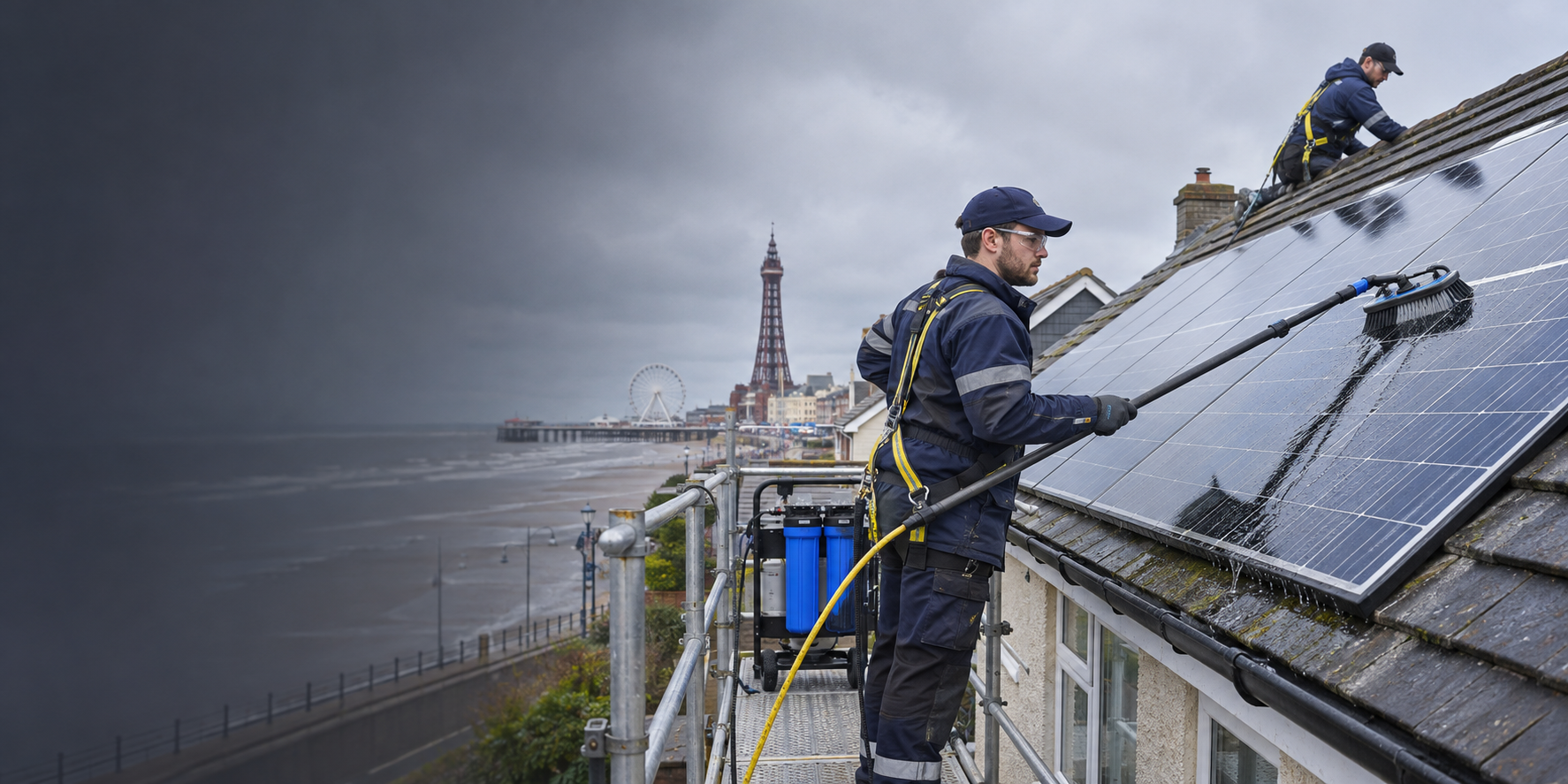
Solar panel cleaning in Blackpool should protect both the array and the people working around it. Panels can collect airborne dirt, salt residue, pollen and bird deposits, but a visible film does not justify unsafe roof access or an unsuitable chemical. Nova Clean discusses cleaning for homes and commercial premises across the Fylde after asking about the array location, roof condition, panel manufacturer and safe access. The proposed method should respect electrical equipment, seals, coatings and drainage. We do not assume that cleaning will increase output by a fixed percentage. A useful decision considers monitoring data, the type of deposit, the cost of access and the manufacturer's care guidance.
Locate the array and identify the equipment
Panels can be fitted on pitched roofs, flat roofs, canopies or ground-mounted frames. Each arrangement creates different access and runoff conditions. We ask for photographs taken from a safe position, the installation records and any maintenance instructions available. The owner should identify nearby inverters, cables, isolators and roof lights, but a cleaner should not open or disconnect electrical equipment. We consider the height, orientation, tilt and surrounding obstacles before deciding whether the surfaces can be reached safely. A ground-mounted installation may be straightforward to access, while a residential roof can require a separate specialist access plan.
Check whether cleaning is actually needed
Rain can remove some loose soil, while persistent bird deposits, tree residue or dust may remain. We ask what the owner has observed and whether the system's monitoring data shows a change that cannot be explained by weather, season or shading. Cleaning may improve visibility and remove stubborn deposits, but energy output depends on many factors. We avoid promising a specific return on the work without evidence. A small array with difficult access may require a different economic decision from a large commercial installation. The quotation should state the area and condition to be cleaned, not imply that any drop in production will be fixed by washing.
Plan safe access without stepping on panels
Panels are not walkways, and the supporting roof may have fragile areas. We assess access from the ground, a suitable platform or an approved roof system according to the site. A ladder alone may not provide safe reach across a wide array. On a flat roof, skylights and edges remain hazards even when the surface looks level. The client should provide any roof survey or safe-access information and identify who can authorise the work. If the array cannot be reached safely with an appropriate method, we should say so rather than improvise. Work at height controls are part of the cleaning scope.
Respect manufacturer instructions and panel coatings
Panel makers may specify water quality, tool type, temperature range and products to avoid. We ask for that guidance where available and choose a non-abrasive process suited to the surface. Hard water can leave mineral marks, while harsh chemicals or rough brushes may affect coatings and seals. We do not use a pressure washer simply because the panels are outdoors. Cleaning should avoid forcing water into connectors or damaged edges. A test on a suitable area can help assess stubborn deposits, but the full array still needs a careful visual check. If a panel appears cracked or loose, the owner should arrange electrical and installation advice first.
Consider electrical safety and system status
Solar arrays can generate electricity in daylight, even when parts of the system are isolated. Cleaning staff must not touch cables, connectors or exposed components and should not attempt electrical repairs. We ask the owner or installer for site-specific safety information and whether a qualified person needs to attend. Damaged wiring, broken glass or water entry changes the job from routine cleaning to a matter for a competent specialist. The quotation can cover accessible external panel surfaces while excluding inspection or testing of electrical performance. A clear boundary prevents the cleaning visit from being mistaken for an electrical maintenance service.
Remove bird deposits without spreading them
Bird activity can create localised heavy deposits near panel edges and beneath roosting points. Dry scraping or blasting can spread material and risk scratching the surface. We assess the amount, use a controlled approach and consider the route for collected waste. Cleaning the panel face alone may not address nests or material trapped under the array, and access beneath modules can require an installer. The owner may also need lawful bird management measures to reduce recurrence. We do not promise to dismantle panel mounts or remove active nests as part of ordinary cleaning. These tasks should be coordinated with the relevant specialists.
Control water and runoff on the roof
Water used on panels can flow toward roof joints, gutters, façades and neighbouring property. We assess drainage and avoid excessive volumes, particularly where the roof has known defects. A panel cleaning process should not be used to flush debris into a blocked gutter. The owner should identify any leak history or recent roof repairs. On a commercial canopy, water may fall near vehicles or pedestrians below, so the work zone must be managed. We agree where equipment can stand and how clean water will be supplied. The method should protect both the array and the building beneath it.
Choose suitable weather and time of day
Very hot panels, bright sun, wind and freezing conditions can affect safety and cleaning quality. We discuss a suitable window with the operator, taking account of access, production and the site schedule. A coastal gust can carry water or loosened material beyond the intended area, while rain may make a roof route slippery. The visit may need to be rescheduled when conditions are unsuitable. Cleaning should include setup, protection, treatment and final visual checks rather than a rushed pass over the glass. The owner should know any period when access or nearby space will be restricted.
Commercial arrays and larger premises
A hotel, warehouse or retail site may have many panels across different roof sections. We ask for a layout, panel count, access routes and the building's safe-working rules. Work may be phased around deliveries, plant maintenance or guest circulation. The manager should identify who can isolate nearby equipment if required and who will sign off the cleaned areas. Photographs can record panels treated and any damage seen from the accessible position. We do not claim to inspect the underside or electrical condition merely because the array has been cleaned. A clear plan is especially important where multiple contractors share a roof.
Domestic panels on pitched roofs
A small residential array can be awkward to reach safely, particularly above a conservatory or on a steep roof. We ask about access from the ground, garden width and any fragile structures below. An extendable system may be suitable in some settings, while others need a platform or cannot be cleaned economically at that time. The homeowner should avoid climbing onto the roof or spraying panels from an unstable position before an assessment. A written quotation can explain the chosen method and any excluded area. We also note whether nearby tree growth or bird activity is likely to make deposits recur.
Understand output, monitoring and aftercare
After cleaning, the owner can compare the array's monitoring data over suitable periods, allowing for weather, daylight and system conditions. A single day's production does not establish the effect of cleaning. If output remains unexpectedly low, an installer or electrical specialist should investigate shading, inverter faults or damaged modules. We can record the visual condition of accessible panels and the cleaning completed, but we do not diagnose the electrical system. Future cleaning frequency should be based on observed soiling and access cost, not a blanket claim that every array needs the same schedule.
Coordinate with roof repairs and bird control
Panel cleaning may be best scheduled after a roof repair or a lawful bird exclusion project. If an installer must lift modules to address nests or damaged wiring, cleaning before that work could be wasted. We ask what other work is planned and agree a sensible order with the property manager. Deposits on nearby tiles, gutters or façade are separate areas that should be included only if quoted. The client can then arrange a complete project without assuming that one panel-cleaning visit covers every roof issue. Clear coordination reduces repeat access costs and avoids disturbance to newly cleaned surfaces.
Provide a practical handover
The record can identify the array or roof section treated, any panel left inaccessible and visible concerns such as cracking or loose fixings. Photographs from safe positions may help a remote owner compare the condition, though reflections can obscure detail. We explain the products and water method used where relevant and any aftercare instruction from the manufacturer. A cleaning handover should not state that the array is electrically safe or performing to specification unless a qualified person has tested it. The owner receives a clear account of the surface work and can pass observations to the installer if needed.
Assess shading and other visible causes of poor performance
A tree, new structure, aerial or accumulated debris at the frame can reduce light reaching panels without the glass being generally dirty. We ask for a description of the concern and photographs that show the wider setting. Cleaning can remove suitable surface deposits but cannot correct a shading pattern or electrical fault. If an owner reports a sudden drop in output, the installer may need to check the system before a cleaning visit is arranged. This distinction helps avoid paying for work that will not address the real issue. The assessment remains visual and does not replace technical monitoring or electrical testing.
Keep roof drainage and panel frames clear
Leaves and debris can gather around frames and roof outlets, particularly near trees. Clearing accessible loose material may be part of an agreed scope, but we do not disturb fixings or reach beneath panels without installer guidance. A blocked gutter or outlet can cause water to back up against the roof, so the property manager should know whether drainage inspection is included. The choice of tools must protect seals and coatings. A plan that treats both visible panel faces and nearby accessible debris can be more useful than washing the glass while leaving a pile of material immediately above it.
Consider water quality and mineral residue
Water with a high mineral content can leave spots when it dries on glass. Depending on the manufacturer's instructions and the equipment available, purified water may help avoid that residue. We also consider the amount of water needed and where it will drain. A surface that dries unevenly in strong sun may show streaks even after soil has been loosened, so timing and technique matter. The aim is a clean panel surface without unnecessary product deposits. We explain the proposed water method rather than making vague claims about a special treatment that cannot be verified.
Know the limits of visual inspection
A cleaner may notice cracked glass, loose frame material or an unusual deposit from a safe position, but many faults are not visible. We record observations and avoid touching suspect components. The owner should pass them to the installer or a qualified electrician, who can decide whether the array needs isolation or repair. We do not remove modules to inspect the roof beneath or certify the system after washing. This division of roles protects the client from assuming that a clean surface is proof of good electrical condition. It also helps the cleaning team stop work if damage is found unexpectedly.
Discuss solar panel cleaning in Blackpool
We consider enquiries from Blackpool, Bispham, Anchorsholme, Marton, Fleetwood, Thornton-Cleveleys, Poulton-le-Fylde and Lytham St Annes. Send the postcode, number of panels, roof type, safe photographs, installation guidance and the deposits you want removed. Tell us if any panel is damaged or if electrical or roof work is already planned. Nova Clean can discuss feasibility, safe access and a defined cleaning scope. Call 0845 52 805 20 or use the cleaning quote form. The first decision is whether the array can be cleaned safely and usefully in its present condition.