
Specialist cleaning technicians operating floor equipment in Blackpool

NOVA CLEAN · BLACKPOOL AND THE FYLDE

Specialist cleaning for Blackpool properties

Careful property recovery, detailed handovers and practical cleaning plans for homes and businesses along the Fylde coast.

Carpet cleaning in Blackpool for homes, hotels and managed properties

carpet cleaning by professional cleaners in Blackpool

NOVA CLEAN · BLACKPOOL CARPET CLEANING

Care for fibres, stains and drying time

A method chosen for the carpet and the property.

Carpet cleaning in Blackpool should begin with the carpet itself, not with a machine setting chosen before anyone has seen it. Fibre, construction, backing, installation, stain history and drying conditions affect the method. Nova Clean discusses cleaning for homes, holiday lets, offices and managed properties across Blackpool and the Fylde. We ask where the carpet is fitted, how it is used, which marks are of concern and whether the room can remain clear during treatment and drying. Coastal sand, repeated foot traffic and spills in hospitality premises create different demands from a lightly used bedroom. A careful assessment gives the owner a realistic account of what can be cleaned and what may be permanent wear or damage.

Carpet cleaning equipment in a Blackpool property

Identify the fibre and construction before choosing a process

Wool, synthetic fibres and mixed materials respond differently to moisture, heat, alkalinity and agitation. A label or installation record is useful, but many carpets have no reliable information available. We examine pile, backing, seams and condition, then consider a discreet test when the construction is uncertain. A carpet with loose joins, unstable dye or a damaged backing may require a more limited approach than a robust commercial tile. We discuss the risks before work starts instead of promising one universal process. Rugs and removable mats should be assessed separately because they may have different dyes, fringes or layered construction from fitted carpet.

Survey traffic lanes, spots and existing damage

Dark paths near doors may contain tracked soil, but they may also reflect crushed pile, fading or changes in the light. Sand from the seafront can abrade fibres when it remains in the pile, making thorough dry soil removal a valuable first stage. We note spills, pet-related marks, previous spot treatments, rust, dye transfer and any areas that have stayed damp. The client can explain when a stain appeared and what products have already been applied. This history helps us avoid repeating a treatment that may have set a mark or altered the fibre. Photographs can record condition before cleaning, especially in a tenanted property where existing wear needs to be distinguished from new soil.

Remove loose soil before wet cleaning

Dry extraction with suitable equipment can remove grit and dust that would otherwise turn into slurry when water is added. Attention to edges, under movable furniture and high-traffic routes helps the later cleaning stage work more evenly. We agree which furniture will be moved, who is responsible for fragile items and whether electrical cables or loose floor coverings need attention. The process is planned to avoid pushing debris into adjoining rooms. Where the carpet is heavily soiled, a pre-treatment may need time to work before extraction. The order matters: applying more solution to a carpet that still holds loose grit rarely produces a better result.

Select cleaning and extraction for the room

Hot water extraction, low-moisture cleaning or a more cautious localised method may be appropriate according to the material and its condition. We choose products and equipment for the actual carpet and the access available, then control the amount of moisture introduced and extracted. Excessive wetting can cause slow drying, wicking, odour or damage to susceptible backing. A busy Blackpool guest room may have a tight turnaround, while an occupied family home may need routes kept open during work. We discuss those constraints before the date is agreed. No method removes the need for ventilation and a realistic drying period after treatment.

Treat individual marks with realistic expectations

A beverage spill, grease spot, ink mark and colour loss are different problems. We can test suitable spot treatment where the fibre and dye allow it, but a stain may have altered the carpet permanently or passed into the backing. Old residues from household products can also affect the result. We avoid aggressive scrubbing that could distort pile or spread the mark. The owner should know whether a localised treatment is worth attempting and what visible change is realistic. In rental properties, a cleaning invoice does not prove that a pre-existing stain was removable. A clear before-and-after record gives a more useful account of the outcome.

Plan drying, ventilation and room access

Drying depends on temperature, ventilation, humidity, carpet construction and how much moisture has been introduced. We ask whether windows can be opened safely, whether heating or ventilation is available and when furniture or occupants must return. Protective pads may be needed beneath suitable furniture while the carpet dries. Returning heavy items too early can leave indentations or transfer colour, and walking on damp pile can bring new soil into the cleaned area. We provide practical aftercare for the agreed method without guaranteeing a fixed drying time in every building. Basements, poorly ventilated flats and humid coastal conditions deserve extra consideration.

Carpets in hotels, holiday accommodation and offices

Commercial premises need a schedule that respects guests, staff and fire routes. We can discuss phased work by corridor, room or floor, with access to water and power agreed in advance. Patterned carpets may disguise soil, but that does not remove the need for regular vacuuming and planned deep cleaning. In a hotel, the manager should identify rooms that can remain vacant long enough to dry and any housekeeping checks required before sale. Offices may have wheeled chairs, cable covers and fixed furniture that limit access. A written scope clarifies whether the work includes only open areas or also edges and spaces beneath movable items.

End of tenancy and property handover carpets

A landlord or letting agent may request carpet cleaning near a key handover date. We ask for the inventory, room sizes, existing photographs and any deadline for inspection. The work can be arranged alongside an end of tenancy clean, but carpets should be treated at a point that allows drying before final checks. Marks from wear, burns, bleach or long-term moisture cannot be reversed by ordinary cleaning. We distinguish a cleaning result from a repair or replacement decision. If the property has been vacant with an unknown leak, moisture and any source of contamination should be investigated before a routine carpet process is chosen.

Respond carefully to odours and contamination

Odour can arise from a recent spill, persistent moisture, smoke, pets or material beneath the carpet. Surface cleaning may reduce soil without addressing a contaminated underlay or subfloor. We ask about the source, duration and any previous attempts to treat it, then explain whether cleaning is appropriate or whether lifting and replacement need consideration. A property affected by sewage, floodwater or bodily fluids requires a separate risk assessment and may need removal of porous materials. We do not describe fragrance as odour remediation or promise that a spray can correct hidden contamination. The condition beneath the surface matters when recommending the next step.

Protect delicate edges, stairs and adjoining finishes

Stairs, landings and fitted edges require controlled tools and careful positioning. A narrow stair in an older Blackpool property may restrict equipment, while polished wood or marble near the carpet needs protection from moisture and product residue. We discuss access, parking, lift availability and where hoses or equipment can be placed without blocking a common route. Delicate thresholds and frayed edges should be recorded before treatment. The plan can exclude unstable areas if working on them would worsen damage. These practical details help the client understand the quotation and reduce surprises on the day.

Keep carpets cleaner after the visit

Regular vacuuming with a suitable machine removes abrasive grit before it settles into the pile. Entrance mats can reduce soil from pavement and sand, provided they are maintained themselves. Spills should be addressed promptly according to fibre guidance, using gentle blotting rather than rubbing an unknown product into the carpet. Staff in a holiday let or office can keep a simple record of recurring marks so the source can be corrected. Periodic professional cleaning should be based on use and condition, not on a claim that every carpet needs the same interval. A sound maintenance routine extends the value of the detailed clean.

Understand why a mark returns after cleaning

A stain can appear to fade during treatment and then return as moisture moves upward through the pile. The material beneath the visible fibres may still hold residue, particularly where a spill was large or an earlier attempt used too much liquid. We assess the likely source and explain whether a further controlled treatment is sensible. Repeated saturation is rarely a responsible answer. Where the backing or underlay has absorbed a substance, replacement may be more appropriate than another surface clean. Recording the pattern and timing of a returning mark helps distinguish wicking from a new spill.

Consider carpet tiles and modular commercial floors

Office and hospitality carpet tiles can be cleaned in place when their construction, adhesive and condition permit it. Some tiles lift at the corners or have been replaced with a slightly different product over time, creating uneven response to cleaning. We check joins and any loose units before machines are used. A severely damaged tile may be easier to replace than to treat repeatedly. Modular flooring also allows an operator to phase work around circulation routes, but wet cleaning must still respect the substrate and drying arrangements. We agree which areas can be released and how the boundaries of each phase will be marked.

Decide what to move and what must stay in place

A room can contain heavy wardrobes, delicate antiques, beds, desks and electrical equipment. The quotation should identify furniture that will be moved by the client, items the cleaning team can safely shift and areas that remain inaccessible. We do not assume that a single cleaner can move a full cabinet or disconnect equipment. Clearing small belongings and cables before arrival gives better access and saves time, while a photograph of fixed furniture helps plan the work. After cleaning, suitable items should only return when the carpet has dried sufficiently. This practical arrangement avoids damp patches under furniture and makes the finished result more consistent.

Check for colour change, pile distortion and old repairs

Not every uneven area is soil. Sunlight through a window can fade a section of carpet, and repeated furniture movement can crush or distort the pile. Previous patches, seams and glue residues may become more visible after surrounding soil is removed. We inspect these features before work and discuss the difference between cleaning, grooming and repair. A professional clean may improve the appearance of the whole room while leaving a pale patch or flattened route visible. Giving the client this information early is more useful than promising a uniform colour that the carpet can no longer achieve.

Keep records that support sensible maintenance

For a single home, a brief note of the method and any outstanding stain may be enough. A hotel or managed property can benefit from a room list showing cleaning dates, areas treated, unusual conditions and recommended follow-up. The record helps the operator distinguish recurring leaks or spills from ordinary use and plan the next visit. It also gives a new property manager a clearer history than an unexplained invoice. We describe the work actually undertaken and the limits observed, including any area left untreated because the material was unstable or inaccessible. Honest records support better decisions about care, repair or replacement.

Coverage and a useful quotation for Blackpool

We discuss carpet cleaning in central Blackpool, North Shore, South Shore, Bispham, Anchorsholme, Layton, Marton, Squires Gate, Fleetwood, Thornton-Cleveleys, Poulton-le-Fylde and Lytham St Annes. Send the postcode, number and approximate size of rooms, fibre information if known, photographs of significant marks and your preferred access dates. Tell us if the carpet is in an occupied home, a managed building or accommodation with a fixed handover time. We can then advise what further assessment is needed, which areas are included and how to plan drying. Call 0845 52 805 20 or use the cleaning quote form to describe the property.
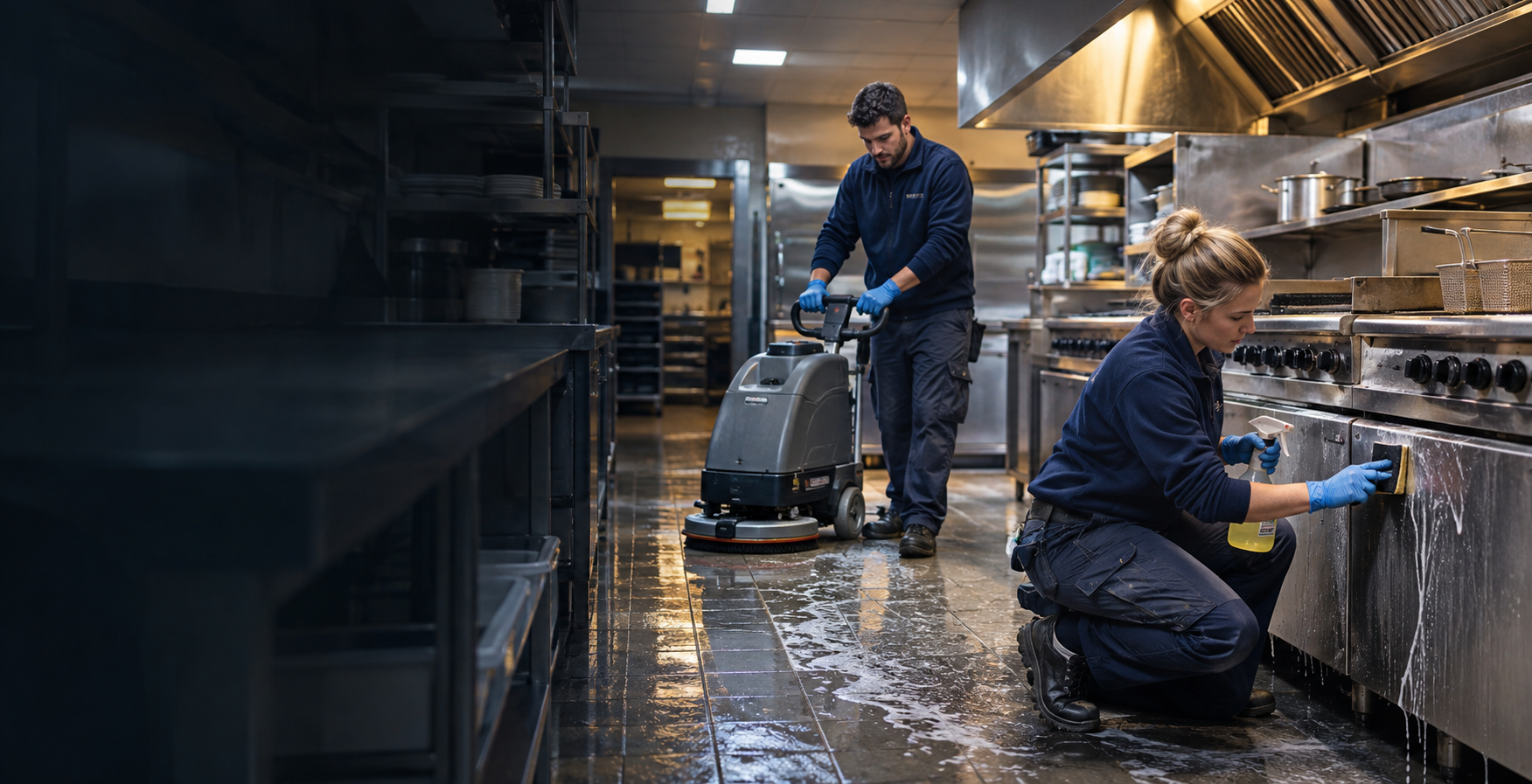
Professional kitchen cleaning in Blackpool for restaurants, hotels and food businesses

commercial kitchen cleaning by professional cleaners in Blackpool

NOVA CLEAN · BLACKPOOL COMMERCIAL KITCHEN CLEANING

Detailed care around food operations

Grease, equipment and safe return to service planned together.

Professional kitchen cleaning in Blackpool has to fit the way a food business actually operates. Grease, airborne residue, food debris and moisture collect in different places, while surfaces and equipment have their own care requirements. Nova Clean plans detailed cleaning for restaurants, hotels, cafés, takeaways and institutional kitchens across Blackpool and the Fylde. We begin with the operator's description of the premises, the equipment that can be released, the working hours and the purpose of the clean. A kitchen preparing for reopening after a refurbishment needs a different programme from one that requires a periodic deep clean between busy service periods. Clear boundaries, safe access and a documented handover matter as much as the visible result.

Define the cleaning scope around the working kitchen

The first survey should identify preparation areas, cooking lines, washing zones, cold storage, dry stores, staff areas and the routes used to remove waste. We ask which equipment can be moved by the operator, who can isolate it and whether the manufacturer has specified cleaning methods. Fixed extraction, gas appliances and electrical connections are not items to dismantle casually as part of a general clean. A useful quotation distinguishes accessible exterior surfaces, interior cupboards, appliances released for cleaning, floors, wall finishes and specialist systems requiring a separate competent contractor. This makes it possible to plan a safe intervention without implying that a visible wipe down covers hidden grease in ductwork.

Plan the work between service periods and maintenance visits

Blackpool hospitality can have pronounced peaks around weekends, school holidays, conferences and seafront events. A late finish or early start may be necessary, but the team still needs realistic access, lighting, water, power and time for surfaces to dry. The manager should identify when deliveries stop, when food can be removed or protected, and when maintenance engineers will work on appliances. Cleaning immediately before a contractor drills or replaces equipment can waste effort and create fresh dust. We agree a sequence with the operator, allowing a final visual review before the kitchen returns to service. Where several rooms or floors are involved, the plan can set separate handover times for each area.

Assess grease without damaging finishes

Cooking oils change with heat and time. Fresh deposits on a suitable washable surface behave differently from baked residue on a delicate finish or grease trapped behind a fixed appliance. The choice of product, dwell time, tools and rinsing method should follow the material and product instructions. Stainless steel can scratch when abrasive pads are used indiscriminately, while painted surfaces, seals, natural stone and certain plastics may react to strong alkaline chemicals. We identify test areas when a finish is uncertain and explain where cleaning is unlikely to restore a permanently stained or damaged surface. Protecting the equipment is part of the service, not an afterthought once a mark appears.

Separate food-contact surfaces from surrounding fabric

Food-contact surfaces require particular attention to the products used and the operator's own food safety procedures. The manager remains responsible for deciding how the kitchen is brought back into food production, including any final sanitising steps, reassembly and checks. Our cleaning plan can address suitable worktops, accessible shelves, splashbacks and surrounding fixtures, followed by the rinsing and drying required by the product instructions. We should know which areas contain unpackaged food, utensils or open ingredients before work begins. Protecting or removing them avoids contamination from dust, overspray and displaced grease. A documented boundary between cleaning and the operator's subsequent food safety checks helps prevent assumptions at handover.

Clean floors, edges and drainage with controlled water use

Commercial kitchen floors often have textured finishes, joints and junctions where fine debris accumulates. The correct method depends on the flooring, its condition, the drainage layout and the proximity of electrical equipment. Excess water may move soil beneath units or into spaces that cannot dry properly. We discuss whether floor drains are serviceable, whether grates can be lifted by authorised staff and whether the floor must be returned to use within a fixed period. Edges behind movable equipment, skirtings and access routes may need more detailed work than open floor areas. Cracked tiles, failed grout and damaged coving should be recorded because cleaning alone cannot make a defective surface sound.

Prepare refrigeration, storage and wash areas

Cold rooms and refrigerators can only be cleaned thoroughly when stock has been relocated safely and the operator has approved isolation or access. We do not make assumptions about temperature control, food disposal or the condition of stored products. Dry stores need their own plan for shelving, packaging and the risk of spreading dust to food preparation areas. Washing stations may show limescale, detergent build-up and moisture damage; the cleaning method should suit the fittings and the water supply. A room-by-room checklist can show what the team will clean and what the operator will empty or release. This prevents an arrival on site where packed shelves block the areas included in the quotation.

Understand the limits of extraction and ventilation cleaning

Hoods, grease filters and visible canopy surfaces may be accessible for an agreed cleaning process, but internal ducts and extraction systems can need specialist inspection and a separate scope. The operator should provide the maintenance records and identify which systems are due for attention. We will not label a general surface clean as a certified duct clean or claim that an extraction system has been made compliant without the appropriate work and evidence. If heavy grease behind a canopy, damaged filters or poor access is found, those findings should be reported so a specialist can assess them. Transparent limits protect the business and help the manager arrange the right follow-on service.

Handle chemicals and waste responsibly on a live site

Products should be selected for the soil and substrate, used according to instructions and stored away from food and staff circulation. We agree where equipment, rinsing water and collected waste can be placed during the clean. Grease and debris must not simply be pushed into drains or left in food preparation zones. The site's arrangements for waste segregation, trade waste collection and hazardous materials should be established before work starts. Staff should know which areas are temporarily out of use and who can authorise access. In a shared building or hotel, deliveries, guests and other contractors may affect the route used by the cleaning team.

Coordinate a refurbishment or reopening clean

A kitchen that has been refurbished may need post-construction dust removal as well as grease cleaning in parts of the premises that remained in use. New surfaces may have protective film, adhesive residue or curing requirements that limit immediate treatment. We ask the contractor to identify finishes and provide care instructions where possible. The first pass can remove loose construction material, followed by detailed surface cleaning once remaining works are complete. Equipment commissioning, gas safety, electrical inspection and pest control are separate tasks for the appropriate people. A cleaning handover should not be used as a substitute for these checks before the kitchen reopens.

Agree evidence and a useful handover

The person commissioning the work should be available to confirm priorities and review the result against the agreed scope. Photographs can record selected areas before and after cleaning where privacy and operational rules allow. A room list can distinguish completed work, inaccessible areas and defects such as damaged sealant or corroded metal. If access changes or extra work is requested, the change should be agreed rather than silently added. This is particularly useful for franchise operators, facilities managers and landlords who may not be present throughout the intervention. The aim is a practical record of cleaning performed, not an unsupported promise about every concealed part of the kitchen.

Local planning for Blackpool and the Fylde

We discuss kitchen cleaning in central Blackpool, South Shore, North Shore, Bispham, Marton, Squires Gate, Fleetwood, Thornton-Cleveleys, Poulton-le-Fylde and Lytham St Annes. Each premises has its own access constraints. A seafront restaurant may have deliveries and guest routes to protect, while a small takeaway may need a short shutdown and limited storage space for equipment. Send the address, kitchen size, operating hours, photographs of the areas of concern and a list of appliances that can be released. We can then discuss whether a survey is needed and what a realistic cleaning programme should include.

Choose a frequency from evidence rather than a fixed package

The interval between detailed cleans depends on cooking volume, menu, ventilation, staffing routines and the surfaces used. A busy fryer line may accumulate deposits much faster than a kitchen that mainly assembles cold food. An opening survey can identify which accessible areas are routinely maintained and which need periodic attention. The operator can then review photographs, staff observations and maintenance records after each service to adjust the scope. We do not prescribe a universal schedule without seeing the premises. Regular cleaning by the food business remains essential between specialist visits, and the detailed clean should be planned to support those daily controls rather than replace them.

Manage mixed materials and difficult access

Food premises contain more than stainless steel. Painted walls, ceramic tiles, resin floors, aluminium fittings, plastic panels and silicone joints can sit within the same small area. A product effective against one deposit can discolour or damage another surface if used without checking. We ask about previous treatments and any maker's guidance, then choose tools that can reach corners without forcing access behind fixed units. Some heavy deposits are a sign of a design or maintenance problem rather than a one-off cleaning task. If a seal has failed or a unit cannot be moved safely, the manager should understand the limit before signing off the work.

Consider adjacent spaces and customer-facing areas

The kitchen may connect directly to a servery, bar, staff corridor or customer area. Moving equipment through these spaces requires a route that protects finished floors and avoids leaving wet surfaces in use. We agree whether adjacent rooms are included, where staff can work while cleaning is underway and how to isolate the affected zone. Where a venue occupies several levels, the route for removing collected debris matters as much as the work at the cooking line. In Blackpool's older hospitality buildings, narrow stairs, basement stores and restricted loading can change the time and equipment needed. These details belong in the survey and quotation.

Respond to a failed inspection or urgent operational concern

When a manager calls after a hygiene concern, the first step is to identify the specific conditions and the authority's requirements rather than promise that cleaning alone will resolve them. The issue may involve food handling, pests, structural defects, temperature control, drainage or equipment maintenance as well as visible dirt. We can discuss the cleaning tasks within our scope and coordinate timing with the operator's other corrective work. Any written cleaning record should describe what was actually completed and any limitations. The business remains responsible for its food safety management and for arranging specialist trades or official follow-up where required.

Request a defined professional kitchen cleaning quotation

Contact Nova Clean Blackpool with the business type, postcode, desired date and the areas that need attention. Tell us whether the kitchen is operating, whether food and utensils can be removed and whether extraction or equipment maintenance is being arranged separately. We will clarify the accessible cleaning tasks, any preparatory work by your team and the information needed for an accurate quotation. Call 0845 52 805 20, email This email address is being protected from spambots. You need JavaScript enabled to view it. or use the cleaning quote form. A clear brief makes it easier to protect your equipment, schedule the work and understand what will be handed back.

Hoarding cleaning in Blackpool with careful clearance and deep cleaning

hoarding cleaning by professional cleaners in Blackpool

NOVA CLEAN · BLACKPOOL HOARDING CLEANING

Clearance with care and a practical sequence

Belongings, access and hygiene considered before work begins.

A property affected by severe clutter cannot be judged from a photograph of one room or reduced to a routine cleaning checklist. The visible accumulation may conceal blocked exits, damaged flooring, food waste, damp materials or possessions that the occupant intends to keep. Nova Clean Blackpool discusses hoarding cleaning with the person who can authorise access and decisions about belongings, then separates the proposed sorting, clearance and cleaning tasks. We consider homes and managed accommodation across Blackpool, Bispham, Anchorsholme, Layton, Marton, Fleetwood and the wider Fylde. The first conversation can be practical and discreet: tell us which rooms can be entered, whether the occupant is involved, what must be protected and what outcome is needed. A useful plan respects the person as well as the condition of the property.

Careful sorting during hoarding cleaning in a Blackpool home

Agreeing who makes decisions about belongings before any clearance begins

A landlord, relative, housing officer or managing agent may contact a cleaning company, but arranging access does not necessarily give that person authority to dispose of everything inside. We ask who owns or occupies the property, who can approve removal, and whether another representative needs to be present. Where the occupant can participate, decisions about possessions should be made at a pace and in a form they can manage. Where capacity, tenancy rights or an estate complicate the position, the relevant parties should resolve those matters before a team is asked to remove disputed items. The cleaning specification can record rooms, categories of material and agreed limits, but it cannot settle an ownership question.

Written instructions are especially useful for documents, keys, jewellery, photographs, medicines, financial records and sentimental objects. A keep, review and remove process can reduce accidental disposal, provided there is somewhere secure for the retained items. We do not assume that a bag or box is waste because it is near a bin. If a family wants to sort belongings themselves before the cleaning visit, we can discuss which areas can remain untouched and which routes must be cleared for safe work. This distinction also helps avoid a rushed intervention that leaves the client uncertain about what happened to important possessions.

Assessing access, hidden hazards and the condition beneath accumulated material

Before quoting for a heavily cluttered flat or house, the team needs to know whether doors open fully, stairs and corridors are usable, and utilities are operating. A room that looks accessible from its doorway may have unstable piles or a floor whose condition cannot yet be seen. We ask about leaks, pests, sharps, electrical concerns, structural damage and any known contamination. The first stage may be limited to creating a safe route for assessment rather than clearing the whole home. If a hazard requires a qualified trade or specialist inspection, that work should be identified separately instead of treated as a routine cleaning detail.

Photographs from a safe position can show the approximate volume and room layout, but they cannot reveal what is under a carpet, behind stacked furniture or inside every container. An initial quotation may therefore need assumptions and a process for discussing changes once more of the property is visible. Clients should describe the number of rooms, floor levels, parking restrictions and any difficult carrying route. In a Blackpool terraced house, narrow access or a rear exit may matter. In a seafront flat, a shared lift, concierge or communal hallway may require a different handling plan. These practical details affect labour and protection of the building as much as the visible clutter.

Separating hoarding cleaning, decluttering and waste removal in the scope

Decluttering is the process of deciding what stays and making spaces usable. Clearance is the authorised movement and removal of agreed material. Deep cleaning addresses accessible surfaces after enough space has been created. These tasks can be coordinated, but they are not interchangeable. Removing boxes does not clean a kitchen, and washing visible worktops does not make a blocked room accessible. A written scope should describe the sequence, the categories of waste and the rooms included. It should state whether furniture, appliances, carpets or fixtures are to remain and whether a second visit may be needed after further decisions by the occupant or family.

Waste may include ordinary household materials, bulky furniture, broken electrical goods or items whose condition calls for controlled handling. The route and documentation must suit the material and the way it is collected. We do not claim that all contents can go into one load or that municipal household facilities will accept trade waste from a commissioned clearance. If a client has already arranged a separate licensed carrier, the cleaning plan should say where that handover occurs. If collection forms part of the proposed work, responsibility, access and any limitations should be clear before work starts.

Working in stages when the occupant remains involved or the property is occupied

Some homes need a staged approach because the occupant continues to live there or because important possessions cannot be decided on in a single day. A first stage may open the entrance, kitchen or bathroom, followed by sorting and cleaning room by room. The order should reflect safety and the occupant's priorities, not a generic visual transformation. There must be a clear place for retained belongings so they are not repeatedly moved through cleaned rooms. If a support worker or relative is involved, one agreed contact should confirm decisions during the work. Cleaning staff should not be placed in the role of deciding a person's personal or clinical needs.

For an occupied property, we discuss pets, working hours, privacy and the use of essential rooms. It may be necessary to protect a route to the bathroom or kitchen throughout the intervention. The team should know whether vulnerable people will be present and whether any part of the property is excluded. Discretion includes limiting photographs and sharing only the practical information needed to arrange the work. An occupant may need ongoing support after the physical condition improves. The cleaning visit can address agreed property tasks, while any longer-term care or tenancy support remains with the appropriate people and services.

Choosing cleaning methods after the surfaces become visible

Once agreed material has been moved, the condition of floors, walls, appliances and fittings can be assessed properly. Dust and loose debris should be dealt with before wet cleaning. A sealed hard surface may tolerate a different product from unsealed timber, porous stone or damaged laminate. Carpet backing and underlay can retain moisture or contamination that is not obvious from the pile. We discuss whether a finish can be cleaned, whether an inconspicuous trial is appropriate and whether replacement is more realistic. A stronger product or more water is not automatically a better response to long-standing deposits.

Kitchens and bathrooms can need particular attention to accessible edges, units, appliances and plumbing fittings after belongings have been cleared. Food residue, grease and mineral scale require different processes. Cleaning behind a freestanding appliance depends on whether it can be moved safely and whether electricity and water connections are suitable. Mould-like growth or persistent damp should prompt investigation of the moisture source rather than a promise that wiping the visible surface will resolve the problem. Damaged sealant, leaking pipes and failed finishes are repair tasks. A useful completion record distinguishes cleaned surfaces from materials that still require another trade.

Considering odour, pests and contamination without promising an instant cure

A smell in a cluttered home may come from food waste, damp textiles, pet deposits, drainage or material absorbed into a floor. Clearing visible waste and cleaning accessible surfaces may improve conditions, but the cause needs to be identified before an odour treatment is specified. Fragrance can mask a smell temporarily without removing the source. Porous materials may need removal if they cannot be cleaned adequately. We explain the assumptions behind any proposed method and review the room after drying. A short telephone description is not enough to guarantee that every odour will disappear.

Evidence of insects or rodents should be mentioned before the visit so the sequence of pest control and cleaning can be considered. Disturbing heavily contaminated material without an appropriate plan may spread dust or expose hidden hazards. A pest contractor may need to treat or advise on the property before or alongside clearance. If bodily fluids, sharps or other unusual material are present, the handling and waste route should be assessed separately. The presence of clutter alone does not prove contamination, and a single label should not replace an inspection of what is actually in the home.

Planning logistics for Blackpool, Fleetwood and the Fylde coast

Properties in central Blackpool can involve parking restrictions, loading times and shared entrances. In Bispham, Anchorsholme or Marton, access might be easier, but a long path, conservatory or upstairs rooms can change the time needed to move material. Fleetwood and Thornton-Cleveleys enquiries may involve a different travel and collection arrangement from a property near the town centre. We also discuss Poulton-le-Fylde, Staining, Little Singleton, Squires Gate and Lytham St Annes, with coverage and availability confirmed for the specific address. Provide the postcode, property type, floor level, likely volume and any deadline when requesting an assessment.

Coastal conditions can add damp or salt deposits to the cleaning problem, but no neighbourhood should be assumed to have the same property condition. A vacant flat after a long closure, an occupied family home and a managed rental need different access and communication arrangements. Where other contractors will repair flooring, electrics or water damage, their work should be sequenced with cleaning. A finish that is newly painted or sealed may need curing time before it is treated. Keys, alarms, utilities and the person available for decisions on the day should be settled before an appointment is confirmed.

What a realistic hoarding cleaning quotation should include

The quotation should identify the rooms, accessible surfaces and agreed stages of sorting, removal and cleaning. It should distinguish labour and equipment from waste collection, special handling, repairs and optional treatment of carpets or upholstery. Volume estimates made from photographs can be uncertain where piles conceal other material. The client should know how a discovery that changes the scope would be discussed and approved. A universal price per room is rarely helpful for a property where one small space may require more decisions and controlled work than a much larger room. Access, carrying distance, protective measures and the number of visits also affect the plan.

Ask whether inside cupboards, ovens, windows, lofts, garages and external areas are included. A room may be visually clearer while still containing unsorted cupboards or damaged fixtures. If a landlord needs an inventory or an insurer needs records, explain that requirement before the work begins. The responsible person can then compare the proposed work with the condition they need for handover. Cleaning does not repair worn flooring or certify that a building is free from every hidden defect. Clear exclusions and a route for agreed variations are more useful than an absolute promise based on a brief description.

Preparing for the visit and reviewing the result together

Before the team arrives, confirm who can unlock the property, which belongings must remain and whether there is a safe place for review items. Do not move unknown hazardous material simply to improve photographs. Tell us about pets, utilities, restricted rooms, known sharps, leaks or pest activity. If a relative or support professional is helping the occupant, agree how decisions will reach the team without conflicting instructions. During the work, any newly discovered issue should be recorded and discussed before the scope is expanded. At handover, compare the rooms and tasks completed with the written specification.

A clean and accessible property may still need repairs, replacement of absorbent material or support to maintain the result. That distinction should be explained without blaming the occupant. Keep the agreed scope, any authorised changes and relevant waste information with the property records. For a tenancy or sale, allow time for drying and follow-on trades before final presentation. The practical aim is to make decisions visible and the intervention manageable, so the person commissioning the work knows what has been removed, what has been cleaned and what remains to be addressed.

Discuss a discreet plan for a Blackpool property affected by hoarding

Contact Nova Clean Blackpool with the postcode, number of rooms, a factual description of access and the main concern. Tell us whether the occupant can take part, who is authorised to decide about possessions and whether photographs can be shared safely. We can discuss a staged clearance and deep cleaning plan, the information needed for a quotation and any separate specialist work that must come first. Write to This email address is being protected from spambots. You need JavaScript enabled to view it., call 0845 52 805 20 or use the cleaning quote form. The first enquiry need not disclose private personal history to establish a practical next step.

Fire and smoke damage cleaning in Blackpool and the Fylde

fire damage cleaning by professional cleaners in Blackpool

NOVA CLEAN · BLACKPOOL FIRE DAMAGE CLEANING

Assess soot and smoke before restoration

Residue, surfaces and access shape the cleaning plan.

A fire leaves more than a visible burn mark. Smoke can settle in rooms untouched by flame, fine soot can move through openings and ventilation paths, and water used to control the incident can create a separate cleaning problem. Nova Clean Blackpool plans work in a defined sequence, beginning with safe access and an assessment of the affected materials. We discuss the property, the extent of the incident and the outcome needed by the owner, occupier, insurer or managing agent. Our coverage includes Blackpool, Bispham, Anchorsholme, Layton, Marton, Squires Gate, Fleetwood, Thornton-Cleveleys, Poulton-le-Fylde and Lytham St Annes.

Existing photograph of fire and smoke damage cleaning in Blackpool

First decisions once the fire service has left

Do not treat the end of firefighting as permission to enter every part of a building. The fire service, building owner or another responsible person may need to confirm that access is allowed. Electricity, gas, weakened ceilings, damaged stairs and unstable contents can present risks that cleaning equipment cannot solve. An electrician, structural specialist or other qualified trade may have to make an area safe first. When insurance is involved, notify the insurer promptly and follow its instructions about documentation and salvage. Moving damaged goods before photographs and an inventory are taken can make a later discussion more difficult.

Tell us which spaces were directly affected and which have smoke or odour only. Share whether the building is occupied, whether heating and water are available, and whether access is controlled by a landlord, agent or insurer. A call from a Blackpool terrace with one affected kitchen needs a different plan from a guest house corridor, a seaside shop or a workshop with several connected rooms. We explain which information helps an initial assessment and which findings require a visit before the scope can be priced.

Separating fire, smoke and water damage

The origin and spread of an incident influence the cleaning method. A small pan fire may leave oily deposits on kitchen cabinets and a persistent cooking odour. An electrical fault can produce residues on nearby fittings and may require electrical inspection before surfaces are touched. A larger fire may damage plaster, timber, wiring and insulation beyond the reach of cleaning. Smoke from different materials behaves differently, so a single product or machine cannot be assumed suitable for every room.

Water used during firefighting can saturate flooring, skirting, wall voids and stored goods. A surface can appear dry while moisture remains beneath a finish. We distinguish cleaning from drying, repair and reconstruction in the proposed scope. If there is standing water, unsafe power or unstable material, those issues take priority. A separate drying contractor or building trade may be needed before detailed soot removal can be effective. The goal is to avoid spending money on a finish that will have to be removed later.

Recording the condition before anything is disturbed

A useful record includes wide photographs of each room, closer views of affected surfaces and an inventory of items that may need specialist treatment or disposal. The owner or insurer should decide how valuable contents are recorded and who has authority to release them. We ask about sentimental possessions, business records, stock and equipment before a clearance plan is agreed. A technician should never assume that an object is waste because it is smoke stained. Equally, a surface that looks intact may have been exposed to heat or contaminated water.

For flats and shared buildings, the record should distinguish the source property from neighbouring areas and communal routes. Soot can move into a landing or adjoining room, while damp from firefighting may travel in another direction. In Blackpool properties with older finishes, decorative mouldings and original joinery can make removal more costly than the first glance suggests. Identifying those features at the outset helps set a realistic boundary between cleaning and conservation work.

Containing soot while rooms are assessed

Dry soot is easily transferred by shoes, cloths and air movement. Unplanned wiping can drive a residue deeper into a porous finish or spread it onto clean surfaces. The team defines an access route, uses suitable protective equipment and separates affected contents where practical. The exact level of containment depends on the condition of the building and the work to be done. It should be proportionate to the risk, not an automatic claim that every fire scene needs the same enclosure.

Loose deposits can often be removed with controlled methods before wet cleaning begins. A cleaner should test surfaces and use equipment appropriate to the material, keeping records of what has been treated. Plaster, painted walls, plastics, metal, stone and fabric may each respond differently. Aggressive cleaning can remove a finish or leave a tide mark. We explain where a test area is sensible and where replacement is more reliable than repeated attempts to restore a damaged surface.

Cleaning hard surfaces without masking underlying damage

Cabinets, doors, frames, tiles and sanitary fittings may be cleanable if heat has not altered them and the surface is sound. Greasy soot needs a method suited to both the deposit and the finish. A product that lifts residue from a glazed tile can damage a painted cabinet or unsealed timber. Detail work around hinges, vents, light fittings and edges matters because deposits left in these places can later reappear as dust or odour. Electrical fittings should be assessed by the appropriate trade before cleaning or reuse.

Walls and ceilings require particular care. A stained but structurally sound finish might be cleaned in preparation for later decoration, while blistered paint, charred plaster or contaminated lining may need removal. We do not describe painting over soot as a cleaning solution. The surface must be assessed, cleaned or prepared to the standard required by the next trade, and any coating selected by the decorator or restoration contractor for the actual condition.

Soft furnishings, flooring and belongings

Textiles can hold smoke residue and odour even when the visible deposit is slight. Curtains, carpets, mattresses and upholstered furniture need individual decisions based on material, exposure, value and the possibility of controlled cleaning. A porous item heavily affected by fire, contamination or firefighting water may not be economically recoverable. We discuss these limits before a quote assumes that every belonging can be returned to service. Sentimental items can warrant a separate specialist assessment rather than a routine cleaning price.

Flooring presents a similar distinction. A sealed hard floor may permit cleaning once the building is safe, but a laminate with water beneath it or a scorched timber board may need lifting or repair. Carpet can trap fine residue below the visible pile. Lifting a corner, measuring moisture or obtaining a specialist assessment may be needed before promising an outcome. In holiday lets and rented flats around Blackpool, timing pressures are understandable, but replacing a damaged floor after an incomplete clean can cost more than planning the sequence correctly.

Odour treatment follows source removal

Smoke odour can remain in absorbent materials and hidden spaces after visible surfaces have been wiped. Deodorising equipment may form part of a treatment plan, but it should follow the removal of contaminated debris and suitable cleaning of affected surfaces. A fragrance that briefly covers a smell is not restoration. We identify likely sources, explain access limitations and state whether the proposed treatment includes adjacent rooms, ventilation paths or stored contents. Where building materials have absorbed contamination, removal or later building work may be required.

No responsible team can guarantee that every odour will disappear after a single visit without seeing the building and understanding what remains within it. The outcome depends on the fuel involved, ventilation, elapsed time, porosity and repairs. We describe the work proposed and the conditions under which a follow-up inspection would be useful. If an insurer or managing agent needs a clear report, the agreed scope and treatment record should be kept alongside the property photographs.

Flats, holiday accommodation and commercial premises

A Blackpool flat may have shared corridors, neighbouring occupants and limited storage for damaged contents. A holiday apartment has a handover schedule, but guests should not return until the relevant safety checks, cleaning and repairs have been completed. Restaurants and takeaway kitchens may require attention to grease deposits as well as fire residue, with catering equipment inspected by competent specialists. Retail units need careful separation of stock, display fittings and the structure, particularly where the cause of fire or insurance claim is still under review.

Hotels, guest houses and offices often need a staged plan so unaffected areas can be assessed separately. We discuss working hours, noise, waste access, lifts, loading and the person authorised to sign off each area. A scope that simply says full fire clean is too vague for these buildings. Room schedules, photographs and clear exclusions make it easier for the client to coordinate cleaning with electricians, decorators, ventilation specialists and insurers.

Planning around Blackpool building conditions

Properties across the Fylde vary in layout and age. A narrow terraced house may have stairs that limit the movement of equipment and a kitchen whose ventilation connects to rooms above. A seafront guest house can have many small bedrooms and shared service routes. A modern commercial unit may have suspended ceilings or a mechanical ventilation system that needs separate inspection. These differences matter when estimating how far smoke has travelled and how a team can work without carrying residues through unaffected areas.

Weather and ventilation can affect planning. Opening windows is not always suitable when rain can enter a damaged building or when a neighbouring room must be protected. Drying equipment, temporary power and secure access should be coordinated with the people responsible for the premises. If a property is vacant, we ask about alarms, keys, parking restrictions and stored possessions. For a managed block, the freeholder or managing agent may have to approve work in communal areas. Clear permissions and a room by room schedule can prevent unnecessary delays.

Before work begins, identify a contact who can make decisions if a concealed material proves damaged or an item cannot be cleaned as expected. A photograph and short written variation are more useful than an informal assumption made on the day. This is especially relevant when a tenant, owner and insurer are communicating separately.

Quotations, waste and the handover

The price depends on the size and accessibility of the affected area, the type and amount of residue, the surfaces involved, the quantity of contents, water damage and any required clearance. A small kitchen with washable finishes differs from a multiroom property with smoke in textiles and voids. Send a postcode, photographs if safe to obtain, the date of the incident and the status of access. We can then advise whether an inspection is needed and what information should be included in a written quotation.

The quotation should say what cleaning is included, whether contents are treated, what may be removed, who arranges waste handling, and which repairs are excluded. The appropriate route for disposal depends on the materials and the condition of the items. We do not treat hazardous material as ordinary household rubbish. A final walkthrough can record the areas treated, outstanding limitations and the work for other trades. That helps an owner or agent make decisions without confusing cleaning completion with full building reinstatement.

Practical questions before you contact the team

Can cleaning start immediately after a fire?

Only once access is authorised and relevant hazards have been assessed. Fire service attendance alone does not establish that electrical systems, structure and water damaged areas are safe for cleaners.

Will the insurer pay for the work?

Coverage depends on the policy and claim circumstances. Ask the insurer how it wants the damage documented and whether it requires approval before cleaning or disposal. We can provide a defined cleaning scope for consideration.

Can every smoke stained item be saved?

No. The material, heat exposure, residue and any firefighting water determine whether specialist cleaning is sensible. We discuss valuable or sentimental belongings individually rather than making a general promise.

Do you clean outside Blackpool?

We discuss enquiries from Fleetwood, Thornton-Cleveleys, Poulton-le-Fylde, Lytham St Annes and nearby Fylde communities. Provide the postcode and the condition of the building so travel and equipment can be planned.

For a discreet assessment, call 0845 52 805 20 or use the cleaning quote form. A useful first message describes the fire location, affected rooms, water exposure, access status and desired timeframe. We will explain the next practical step and the limits of cleaning before a scope is agreed.

Water and flood damage cleaning in Blackpool and the Fylde

water damage cleaning by professional cleaners in Blackpool

NOVA CLEAN · BLACKPOOL WATER DAMAGE CLEANING

Plan cleaning around the source and drying

Affected materials and water type guide the next step.

Water damage rarely ends when the visible pool has been removed. Moisture can remain beneath a floor covering, behind skirting or in an insulated wall, while the cause of the leak may still be active. Nova Clean Blackpool helps property owners and managers define the cleaning and clearance needed after a leak, flood or escape of water. We discuss the source, the rooms affected, the condition of the building and which other trades need to attend first. Our work is planned for Blackpool and the Fylde, including Bispham, Anchorsholme, Layton, Marton, Fleetwood, Thornton-Cleveleys, Poulton-le-Fylde, Squires Gate and Lytham St Annes.

Existing photograph of cleaning after water and flood damage in Blackpool

Make the property safe and identify the source

The first priority is the people in and around the building. Do not enter standing water when electricity may be present, touch damaged wiring or operate equipment in a room whose supply has not been assessed. A plumber, electrician, building manager or emergency service may need to isolate the source and make access safe. If the water is still entering, cleaning cannot provide a durable result. Follow any advice from the responsible authority about a wider flood event and obtain permission before entering a rented or managed property.

Describe whether the incident came from a pipe, appliance, roof, drainage system, external flooding or firefighting. The source affects both the likely spread and the way contents must be handled. Water from an internal supply is not automatically harmless after it has passed through flooring or building materials. Water from drains or external floodwater may carry additional contamination. We do not label an incident by appearance alone. If the source is uncertain, assessment and appropriate precautions take precedence over a quick promise to mop and disinfect.

Record what happened before moving contents

Photograph the affected rooms from several positions if it is safe to do so, then record close views of the water line, damaged finishes and possessions. Note when the incident was discovered, whether the supply was isolated, what has already been removed and which areas remain inaccessible. An insurer may have requirements for evidence, emergency work and disposal, so contact it early and retain relevant receipts. A landlord, tenant and managing agent should agree who may authorise clearance and who will keep the records. Moving everything into an unaffected room without a plan can spread moisture and confuse the inventory.

In a Blackpool flat or guest house, water may reach neighbouring rooms or the property below. Tell the person responsible for those spaces promptly and keep the affected areas distinct in the record. A stained ceiling might reflect a leak from above, while a ground floor room can be affected by water travelling under a partition. The first wet surface is not always the only damaged surface. A room schedule is useful for larger buildings: identify the floor, room, visible condition, contents and any access restriction for each area.

Assess moisture beyond the visible puddle

Different finishes absorb and release water at different rates. A tiled floor may shed surface water while the adhesive or substrate remains damp. Carpet, underlay, chipboard, plasterboard, timber and insulation can retain moisture after the room looks tidy. A cleaning visit should therefore distinguish surface removal from drying and repair. A competent moisture assessment can help identify where further investigation or controlled drying is needed. We do not infer that a wall is dry merely because the paint feels dry to a hand.

Do not dismantle a wall or floor simply to discover moisture without the permission of the owner and a clear plan for reinstatement. Equally, leaving saturated porous material in a closed room can complicate the recovery. The decision depends on the material, the duration of exposure, the water source and the ability to dry it. We record assumptions and exclusions in a quotation so the client can appoint a drying specialist or builder where the cleaning scope alone is insufficient.

Extraction, clearance and drying in the right sequence

When access is safe, standing water and wet debris can be removed with equipment suited to the material and conditions. The team should protect unaffected routes, separate retained possessions from agreed waste and avoid moving contaminated items through clean living spaces without precautions. Extraction is only one stage. Drying may require air movement, humidity control, ventilation or removal of materials that cannot be recovered, and the equipment plan should be based on a proper assessment. We explain whether drying equipment and monitoring are included in our proposed work or must be arranged separately.

Turning up the heating without understanding moisture levels is not a complete drying strategy. It can leave damp in cavities while the surface changes appearance. A window left open during wet coastal weather may also be unhelpful for a particular room. The best approach depends on conditions inside and outside the building and on whether the structure is secure. If the premises are vacant, arrange access for checks and ensure any machines can operate safely. If they are occupied, agree routes, noise and how rooms will be kept out of use.

Cleaning recoverable surfaces and contents

Once water is removed and the condition assessed, hard finishes can be cleaned using methods compatible with the surface. A sealed tile, painted timber, natural stone and electrical appliance cannot all be treated alike. Visible deposits should be removed before a decision about disinfection. The choice of product, contact conditions and whether a surface is porous matter more than applying a strong smell or a general claim of sanitisation. Electrical items should be inspected by a competent person before cleaning or reuse.

Furniture, documents, textiles and stock need individual decisions. A washable item exposed briefly to a clean supply leak may have different prospects from an upholstered chair submerged in floodwater. Photographs, records and sentimental possessions should be set aside for informed decisions where possible. Do not discard them on the assumption that replacement value reflects personal importance. We can separate agreed clearance from items awaiting specialist attention and identify any limits on what ordinary cleaning can achieve.

Dealing with odour and visible growth carefully

A musty smell after a leak is a reason to investigate the moisture source and material condition, not simply to spray a fragrance. Visible growth can appear on a surface or behind a finish, and its extent may be greater than the part first seen. Avoid dry brushing or disturbing a suspect material without a plan. The appropriate response depends on the location, the cause, the area involved and whether the material can be cleaned or needs removal by a suitable specialist. We do not promise that an odour treatment alone will make a damp room suitable for use.

After cleaning, the room should be reviewed under ordinary conditions. Residual staining may be cosmetic, but a returning odour, new damp patch or lifting floor finish suggests that the underlying issue requires further attention. The handover should distinguish cleaned surfaces from building materials still awaiting drying or repair. This distinction is particularly important before decoration, new flooring or a tenant handover, because concealing a damp layer beneath a new finish can create additional work.

Homes, holiday accommodation and commercial buildings

A water incident in a Blackpool terrace may affect a kitchen, bathroom and the room below. A holiday let has booking pressure and contents that must be inventoried, yet reopening depends on safety, drying and repair as well as appearance. A seafront guest house may have multiple rooms sharing a riser or ventilation route. In a shop, office or restaurant, flooring, stock, equipment and public access may need separate decisions. We discuss the operating constraints and define a room by room scope rather than describing all buildings as one type of flood clean.

For a flat in a managed block, permissions for communal corridors, lifts and waste removal may need to be agreed before equipment arrives. In Fleetwood, Cleveleys, Poulton-le-Fylde and Lytham St Annes, the postcode helps plan attendance, but access and the extent of material affected often matter more than travel distance. Tell us about narrow stairs, parking, locked rooms, alarms and working hours. The clearer the access arrangements, the more accurately the first visit can be planned.

Different water sources require different handling

A broken clean-water pipe, overflowing bath, blocked drain and external flood do not present the same conditions. Even within one incident, water can change after passing through a floor void or mixing with stored materials. Tell the team about drainage smells, sewage, chemicals, fuel or any other unusual deposit. An affected kitchen or commercial storeroom may contain food and packaging that cannot simply be wiped and returned to use. We assess the visible condition, define access restrictions and seek specialist advice if the material is outside an ordinary cleaning scope.

After external flooding, silt can remain in corners, joints, drains and equipment bases. A first pass may remove bulk debris, followed by careful cleaning of recoverable finishes once the building is safe. Porous materials and contaminated possessions require decisions about removal and appropriate disposal. A household vacuum or domestic mop may spread residues and cannot establish that a building is dry. We do not ask occupants to enter an unsafe space to photograph damage for a quotation. A brief description, safe exterior information and a later controlled inspection can be enough to begin planning.

Where several parties are involved, agree who can authorise disposal before bags or furniture leave the premises. Keep a record of retained items and distinguish the water-cleaning work from any later construction work. A landlord may need to coordinate the tenant, insurer and managing agent, while a business owner may need to identify stock that should remain untouched pending an insurance review. These decisions are easier when the initial scope specifies who signs off each stage.

Quotation, insurance records and realistic costs

A useful quotation lists the rooms and surfaces included, whether water extraction, contents handling, cleaning, drying equipment, monitoring and waste removal are included, and what remains for plumbers, electricians or builders. Price depends on the area, water source, depth and duration of exposure, the materials, access and the amount of authorised clearance. A universal price per square metre would hide the difference between a recently discovered appliance leak and water that has entered several rooms through drainage or an external flood.

Ask the insurer whether it requires an inspection before work begins and what emergency measures it permits. Keep photographs, the agreed scope, changes discovered during work and completion information together. Do not assume that every cleaning or replacement cost is covered. If a concealed layer is found to be wet, a written variation with a photograph makes the next decision clearer for the owner, tenant or insurer. We can quote for a defined cleaning task and explain where the condition needs another trade.

Questions that help plan the first visit

Can you clean while the leak is still active?

The source must be stopped or controlled by the responsible trade. A cleaner can discuss emergency protection, but repeated water entry will defeat a completed clean.

How quickly will the building dry?

There is no reliable fixed period without knowing the materials, amount of water, exposure time and drying conditions. Monitoring and a suitable drying plan are more useful than judging by surface appearance.

Should a wet carpet always be removed?

The answer depends on the water source, backing, underlay, duration and condition. Some coverings may be recoverable, while others are unsuitable to retain. The decision should be documented before disposal.

Do you cover the wider Fylde?

We discuss work in Fleetwood, Thornton-Cleveleys, Poulton-le-Fylde, Lytham St Annes and nearby communities. Give the postcode, affected rooms and access conditions so coverage and availability can be confirmed.

Call 0845 52 805 20 or use the cleaning quote form. Explain the source, when the water was found, whether utilities are safe, which rooms and contents are affected and what has already been done. We can then identify the next sensible assessment and a cleaning scope that does not confuse visible tidiness with full drying and reinstatement.

We have 28 guests and no members online